Reviewing Mom I Love You Cross Stitch Pattern for Business
As an embroidery designer who has spent years translating digital concepts into tangible finished product assets, I approach every new file with a critical eye. It is not just about whether the design looks pretty on a screen; it is about how it performs under the needle, how it holds up after washing, and most importantly, how it serves the brand identity of the small business using it. Today, I am reviewing the Mom I Love You Cross Stitch Pattern, evaluating its potential for commercial embroidery projects, branded merchandise, and custom apparel.
First Impressions and Visual Personality
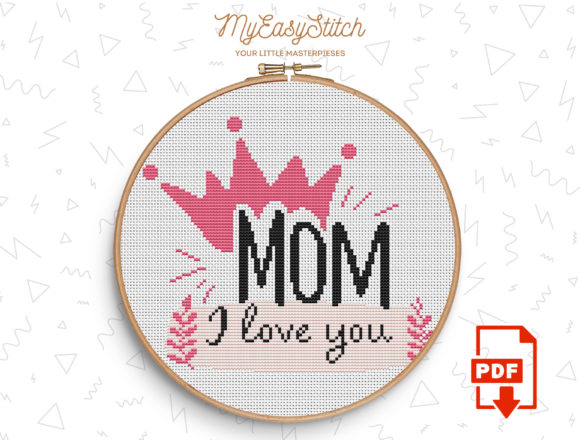
The title alone suggests a sentimental, warm aesthetic, but the technical specifications tell a different story about its utility. With an embroidered area of 7.00 x 6.07 inches (17.78 x 15.42 cm) and a modest stitch count of 98 x 85, this design is surprisingly compact relative to its physical footprint. This indicates a low stitch density, which is a crucial detail for any professional decorator. Low-density designs are generally more flexible and less likely to cause puckering on lightweight fabrics, making them versatile for various applications beyond traditional home decor.
Visually, the requirement for only three DMC stranded cotton colors suggests a clean, uncluttered look. In the world of Graphics and digital assets, simplicity often translates to higher recognizability. For a small business, this means the design can serve as a clear visual marker without overwhelming the garment or accessory it adorns. The "full cross only" stitch type implies a classic, textured appearance that mimics handcrafted charm, aligning perfectly with brands that value authenticity and handmade quality.
Commercial Applications for Small Businesses
When considering this design for small business merch, we must look beyond the obvious. While the sentiment "Mom I Love You" is personal, the execution can be adapted for broader commercial use. Imagine a boutique bakery or a local florist looking to create limited-edition gift items for Mother’s Day. This pattern could be embroidered onto tote bags, creating a high-value tote bag design that customers are eager to purchase and reuse.
For apparel decorators, the dimensions make it suitable for chest logos on work shirts or aprons. An apron embroidery featuring this design could add a touch of warmth to staff uniforms in family-oriented cafes or craft studios. However, because the design is categorized under Cross Stitch Patterns, it retains a rustic, artisanal vibe. This makes it ideal for brands that want to project a cozy, welcoming atmosphere rather than a sleek, corporate image.
Another viable avenue is the creation of embroidered patch products. Patches are currently trending in the fashion and accessory market. A patch featuring this design could be sold as a standalone item or used as a branding element on hats and jackets. The low stitch count ensures that the patch remains flexible and comfortable, avoiding the stiff, cardboard-like feel that high-density designs often produce.
Technical Considerations and Production Notes
Before running this digital embroidery file on production machines, there are several technical factors to address. The specified fabric is 14 count Aida, which is standard for hand cross-stitch but not typical for machine embroidery on apparel. When adapting this for custom apparel, you must consider the fabric texture. On smooth cotton or poly-blends, the cross-stitch effect may need adjustment in the digitizing software to ensure the stitches lay flat and do not gap excessively.
Stabilizer choice is critical. Given the open nature of cross-stitch patterns, using a cut-away stabilizer is recommended for garments that will undergo frequent washing. This prevents the design from distorting over time. Additionally, always test the design in black and white first to check contrast and clarity. If the three required thread colors are too similar in value, the design may lose definition from a distance.
Pay close attention to the hoop size. The 7 x 6 inch area requires a medium to large hoop. Ensure your machine can accommodate this size comfortably, especially if you are embroidering on curved surfaces like caps. Speaking of cap embroidery, this design might be too wide for standard front-panel placement unless scaled down significantly. If scaling down, verify that the text remains legible and the stitches do not become too dense for the cap material.
Brand Identity and Customer Trust
Using a well-executed design like the Mom I Love You Cross Stitch Pattern can enhance brand identity by signaling attention to detail. Customers associate high-quality embroidery with premium products. When they see consistent, clean stitching on your design assets, it builds trust. It suggests that your brand cares about the tactile experience of the product, not just the visual appeal.
For Etsy sellers and crafters, offering items with this design can differentiate your shop from mass-produced competitors. It adds a layer of perceived value, allowing for higher price points. However, consistency is key. Ensure that the commercial embroidery output matches the quality of your printable mockup images. Discrepancies between marketing materials and the actual product can lead to negative reviews and damaged reputation.
Where to Use Caution
While versatile, this design is not without limitations. Avoid using it on very dark uniforms if the thread colors are pastel or light, as visibility may suffer. Similarly, be cautious when applying it to textured fabrics like heavy wool or terry cloth, where the small stitches might get lost in the fabric pile. Always confirm commercial licensing before using any embroidery file for business purposes. The product description does not explicitly state license terms, so it is imperative to contact the seller or check the included documentation to ensure you have the right to sell finished products made with this pattern.
In conclusion, the Mom I Love You Cross Stitch Pattern offers a charming, low-density option for businesses looking to add a handmade touch to their merchandise. By carefully considering fabric choices, stabilizer types, and placement, you can leverage this design to create memorable, high-quality products that resonate with your customers. Whether used for aprons, totes, or patches, it stands as a testament to the enduring appeal of classic stitch work in modern branding.