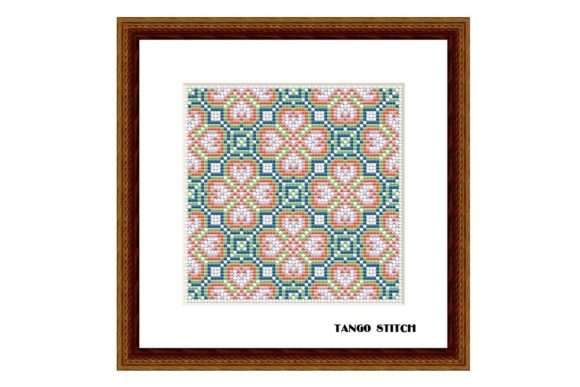
Reviewing Hearts Cross Stitch Ornament Pattern
As an embroidery designer who has spent years digitizing logos and refining stitch paths for commercial clients, I approach every new machine embroidery design with a critical eye. It is not just about whether a motif looks pretty on a screen; it is about how it performs under the needle, how it wears after fifty washes, and how it elevates a brand’s perceived value. Recently, I evaluated the Hearts Cross Stitch Ornament Pattern, a digital asset marketed as an easy cross-stitch design suitable for both beginners and experts. For small business owners, Etsy sellers, and apparel decorators, understanding the practical application of such graphics is crucial before investing time in production.
First Impressions and Visual Personality
The immediate appeal of the Hearts Cross Stitch Ornament Pattern lies in its inherent charm. In a market saturated with sleek, vector-based minimalism, this design offers a refreshing return to tactile warmth. The description notes that it uses only full stitches, which suggests a clean, uniform texture that mimics traditional handwork without the irregularities that can sometimes plague amateur efforts. Visually, it feels friendly, rustic, and decidedly handmade. This aesthetic is powerful for brands that want to project authenticity, care, and approachability.
For a boutique bakery, a local florist, or a pet supply shop, this visual language speaks directly to their core demographic. It does not scream corporate efficiency; instead, it whispers artisanal quality. However, from a technical standpoint, the "cross stitch" style requires careful consideration regarding stitch density. While the pattern is described as easy, translating a cross-stitch graphic into an embroidery file for machine use demands precision to ensure the threads lay flat and do not create excessive bulk.
Real-World Applications for Small Business Merch
When considering where to deploy the Hearts Cross Stitch Ornament Pattern, versatility is key. This design shines in contexts where a touch of whimsy or warmth is needed. Here is how it performs across various merchandise categories:
- Embroidered Patches: This is perhaps the strongest use case. A patch allows for controlled backing and stabilizer use, ensuring the cross-stitch effect remains crisp. It works beautifully on denim jackets, canvas tote bags, or as a removable accent on aprons.
- Apron Embroidery: For cafes and bakeries, staff uniforms are walking billboards. Placing this heart motif on the chest pocket or hem of an apron adds a personal touch that customers notice. It softens the professional look while maintaining cleanliness.
- Tote Bag Design: Canvas materials hold embroidery well. Using this pattern as a central feature on reusable shopping bags creates a desirable retail product that customers are proud to carry, extending your brand identity beyond the store walls.
- Cap Embroidery: While possible, this requires caution. The curved surface of a cap front can distort geometric patterns like cross-stitch. If used here, it should be small and centered, avoiding the side curves where fabric tension varies.
For small business merch, this design serves as an excellent "signature mark." It is distinct enough to be recognized but simple enough to remain legible at smaller sizes. Whether used as a gift with purchase or as part of a limited-edition product line, it enhances the unboxing experience and fosters customer loyalty.
Technical Considerations and Production Challenges
While the Hearts Cross Stitch Ornament Pattern is visually appealing, production realities must be addressed. The description states it is suitable for beginner and expert stitchers, but when scaling this for commercial use, several factors come into play. First, stitch density is critical. Cross-stitch styles can become heavy if the digital file does not account for proper pull compensation. On lightweight fabrics like thin cotton tees, a dense pattern may cause puckering. Therefore, using the correct stabilizer is non-negotiable. A cut-away stabilizer is often recommended for garments that will undergo frequent washing, while tear-away may suffice for patches or items that will not be laundered aggressively.
Another concern is thread colors. To maintain the "cross-stitch" illusion, high contrast between the thread and the fabric is essential. On dark uniforms, light-colored threads must be used, but one must ensure the underlying fabric does not show through the stitches. Testing on actual fabric texture is vital. A rough linen will interact differently with the thread than a smooth poly-cotton blend. Additionally, because the design relies on full stitches, any misalignment in the machine’s timing or tension will be immediately visible, breaking the grid-like perfection that defines the style.
It is also important to verify the specific technical details before production. The provided description does not specify exact stitch count, file format compatibility, or recommended hoop size. Before committing to a large run of custom apparel, you must confirm these specifications with the vendor. Ensure the digital embroidery file is compatible with your machine software and that the dimensions fit your intended placement area.
Enhancing Brand Identity and Customer Trust
In the realm of commercial embroidery, consistency builds trust. The Hearts Cross Stitch Ornament Pattern can become a recognizable element of your visual ecosystem. When customers see this specific heart motif on your packaging, your social media printable mockups, and your physical products, it creates a cohesive narrative. It signals that attention to detail is a core value of your business.
For handmade brands, this design bridges the gap between mass production and artisanal craft. It allows for scalable production without losing the "handmade" feel. This is particularly valuable for Etsy sellers who need to increase output without sacrificing the aesthetic that attracted their initial following. By integrating this pattern into design assets like labels, hang tags, or thank-you cards, you reinforce the premium nature of your finished product.
Practical Designer Notes for Implementation
Before launching this design into your product line, follow these steps to ensure quality control:
- Test in Monochrome: Stitch out the design in black thread on white fabric first. This reveals any structural flaws or spacing issues without the distraction of color.
- Check Scalability: Resize the pattern to its smallest intended use, such as a small patch or sleeve detail. Ensure the individual "crosses" remain distinct and do not merge into a blob.
- Verify Licensing: Confirm that the purchase includes commercial rights. Using a design for small business merch requires explicit permission to sell items featuring the artwork.
- Create Mockups: Use digital tools to visualize the design on various products. Compare it beside other brand identity elements to ensure visual harmony.
- Fabric Testing: Always run a test stitch on the exact material you plan to use for production. Adjust tension and stabilizer based on the results.
In conclusion, the Hearts Cross Stitch Ornament Pattern is a versatile and charming addition to any designer’s library. When handled with technical care and strategic placement, it transforms simple merchandise into meaningful brand tokens. For those willing to invest the time in proper setup and testing, this Cross Stitch Patterns graphic offers a unique way to connect with customers through the timeless appeal of stitched art.